





Pro bono and obtaining judicial appointment – Lord Justice Zacaroli
For our 30th anniversary, we are celebrating the impact of all our volunteers, at all levels of the Bar, who help us continue to make a life-changing impact on those with nowhere else to turn for legal support. Pro bono work does not only allow barristers to make a meaningful difference to the community, but it also provides opportunities for career development. For example, barristers have told us about using pro bono work to evidence the competencies that are assessed in KC applications; there are more details about this outlined in our Guide for KC applications and also on the KC appointments website.
In this story, attention is turned to how pro bono work can also support judicial appointments. Lord Justice Zacaroli shares the impact that pro bono work has on career development, particularly for those contemplating a judicial career.
It is unsurprising that, as a barrister’s career develops and work expands to fill the available time, pro bono work may take a back seat. It is difficult to judge, when juggling existing cases and agreeing to take on a new instruction, how significant a commitment it will turn out to be. And once committed to a paying client, their demands must be met. However, there are many reasons, beyond the obvious public good, for carving out the time for at least some pro bono cases alongside a growing practice.
In a world where practice areas are becoming increasingly specialised, opportunities to gain exposure to other areas of law can be limited. Taking a case through Advocate, can provide that wider exposure. Ironically, perhaps, the more senior and specialised you become, the more daunting it can seem to step outside your comfort zone. The reality is, however, that the core skills developed in virtually any area of practice – cutting through a morass of material to isolate key points, reading legal precedents and structuring an argument methodically and logically – are readily transferrable. The time required to navigate an unfamiliar legal landscape is often less than it might seem at the outset.
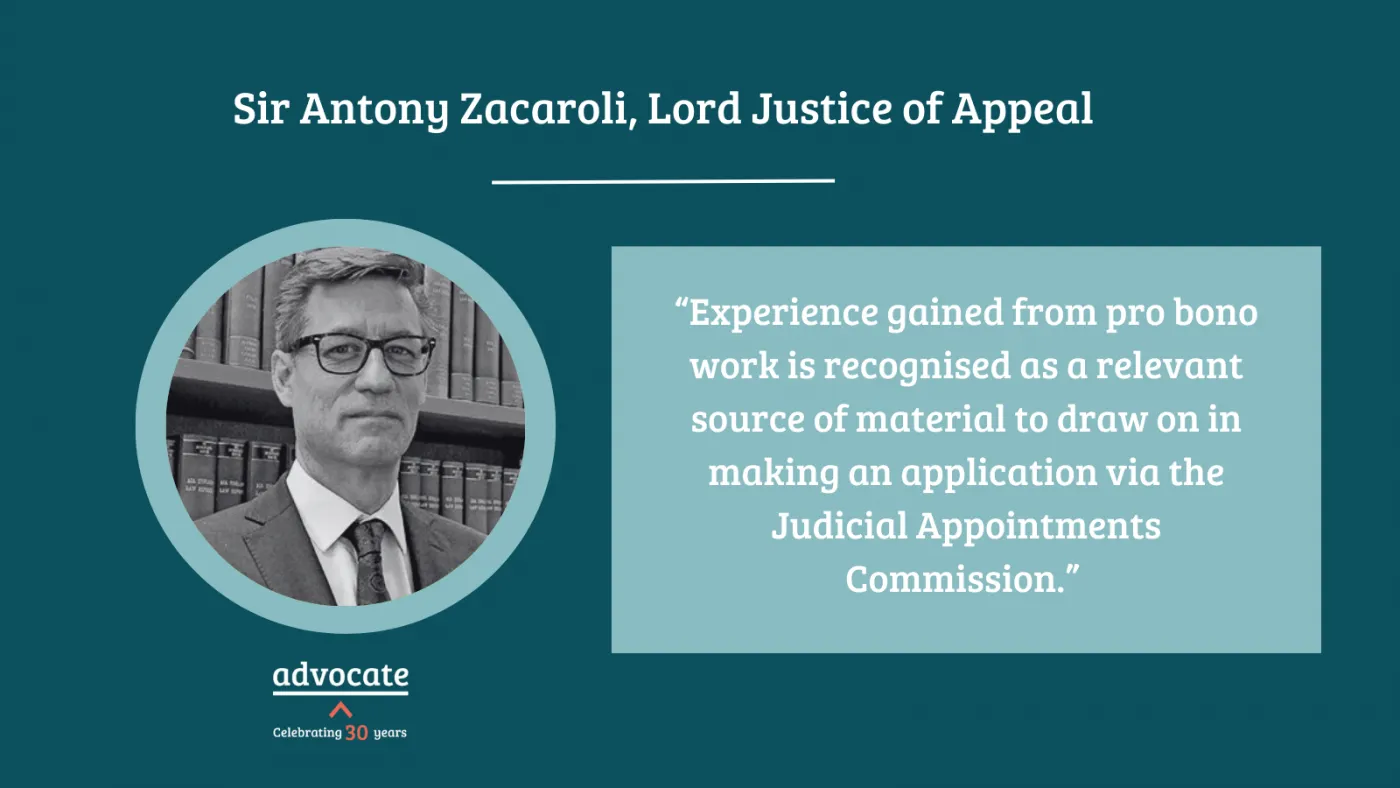
Aside from helping to develop those core skills and getting the opportunity to practice advocacy before judges in a variety of courts and tribunals, I want to highlight the impact on career development- particularly for those contemplating any kind of judicial career. Experience gained from pro bono work is recognised as a relevant source of material to draw on in making an application via the Judicial Appointments Commission. However varied a practice a solicitor, barrister or academic may have had, they will be required to deal with cases well beyond their existing experience when taking up a new judicial role. They are also likely to have to deal with a broader – or at least different – range of litigants than they were used to. Someone with, say, a commercial, employment, or family background will find that having advised or represented a pro bono client in a housing, debt or bankruptcy case will help to equip them for that role.
On a more practical level, pro bono work can provide valuable evidence when it comes to satisfying the various competencies that must be established in the selection processes for judicial appointment, as well as for appointment to silk, or to the Attorney-General’s Panels.
The recently revised Judicial Skills and Abilities Framework, includes qualities such as:
ü Showing flexibility of approach
ü Being able to apply skills and knowledge in unfamiliar or developing areas
ü A willingness to invest time in developing and maintaining skills and knowledge
ü An understanding of what is required for a fair hearing
ü Taking an inclusive approach to those with differences from themselves.
These are all areas where taking on a case through Advocate can provide valuable material to draw on. Moreover, judges are normally extremely grateful to advocates who take the trouble to represent those who cannot afford to pay for legal help. There is a good chance that the grateful judge will – for that reason alone – better remember the assistance provided. As a result, they are well placed to be able to provide concrete evidence if called on for a reference at some later date.
- Antony Zacaroli, Lord Justice of Appeal