

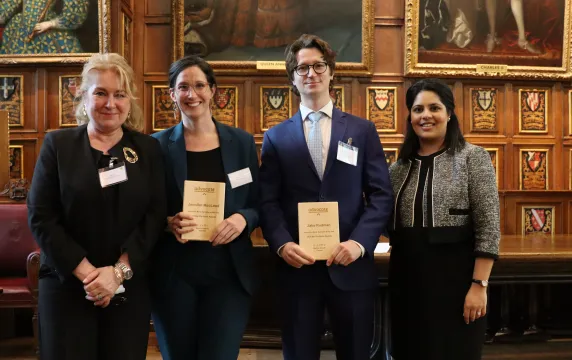
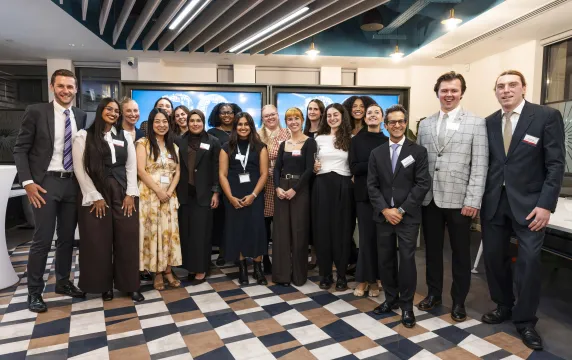
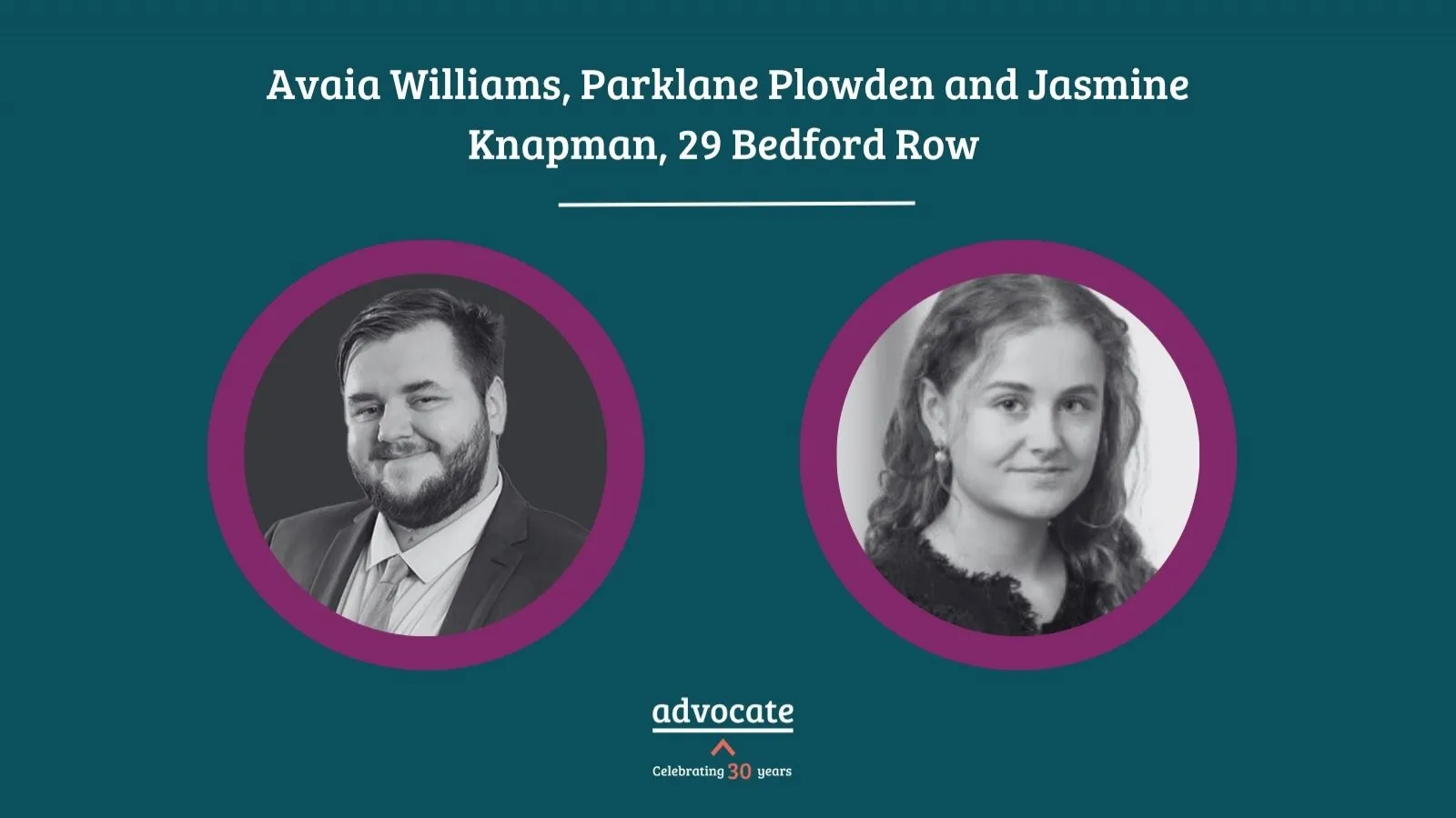
Avaia Williams of Parklane Plowden and Jasmine Knapman of 29 Bedford Row sat down for the Summer 2026 issue of Family Affairs magazine to discuss the importance of pro bono practice in family law.
What drives you to undertake pro bono work in family law?
AW – It may sound cheesy, but I genuinely enjoy the feeling of “giving back” by engaging in pro bono work. The job we do when we are paid is hard enough, so it can seem odd to then do it for free, as it were, but I think that slight altruism of pro bono can give you a boost that you may not sometimes get with paid cases. I do also think it is important to give back and support the system. Coming from quite a disadvantaged background myself, I know what a difference can be made by some dedicated support from somebody who knows how the system works.
Family law is very complex and intimidating to those without knowledge or expertise in this area of law. Litigants in person cannot just go to court and see how it works; the family justice system isn’t as spoken about or even dramatised as areas like criminal, and so most people start with very little understanding of how it works.
More often, litigants in person actually have misconceptions about the Family Court – the assistance of a pro bono barrister starts with reassurance and giving those people a little breathing space.
JK – We are all sadly well-accustomed to the difficulties faced by litigants in person (and by the court as a result). I feel some sense of a professional as well as moral obligation to help, in a very small way, to plug what is now a gaping legal aid hole.
Like many others, I’m sure, I wanted to join the Bar to give a voice to the most disadvantaged people in society. Pro bono work can offer an opportunity to do just that, and to exercise autonomy over our own practices, speaking up on behalf of those who may otherwise be left feeling unable to advocate for themselves. It isn’t a one-way street – my pro bono clients have been amongst the most inspiring and interesting clients I have had, and I have learnt a lot from them in turn.
What personal experiences have shaped your views?
AW – I grew up on an estate in the Midlands known as “The Slum of Birmingham”, and had a rocky start to life. I left school at 16 and eventually found myself in a homeless hostel for 18 months; I have seen the effects of domestic abuse, substance misuse, mental health and those usual factors we see in almost every case, both within my family but also my community growing up.
When I finally decided the Bar was the route for me, I made a pledge that I would use that privilege and position to try to help others and be part of positive change. Whilst this is inherently something that exists by virtue of the role of a barrister, I think those who come seeking pro bono support are in the most vulnerable positions – they are in the same difficulty as those clients we otherwise interact with, but they are facing it entirely alone. I am fortunate enough to have been able to escape that cycle and now feel I am in a place where I should support others who continue to struggle.
JK – My family have been assisted by a barrister pro bono in the past, so I have seen “from the other side” what a difference it can make to have someone guiding you through an otherwise unfamiliar and emotionally fraught process. That’s part of what drives me to undertake pro bono work.
Do you see pro bono work as a professional obligation?
AW – This is a question that has caused much debate when I talk about my pro bono practice, but I do genuinely believe that there is an obligation on the profession to engage in pro bono work. This comes with a caveat, that being that every professional who works in the family system is already engaging in pro bono work: skeleton arguments, questions to experts, Re W questions, poring over thousands of pages of police or medical disclosure, matters which are either entirely without recompense or paid poorly at best. I am sure many have seen the benefit of an otherwise litigant in person being represented pro bono. It helps to narrow issues, allows focus, protects victims of domestic abuse and supports parties to fully engage. Judges are assisted and the time dedicated to proceedings is overall better allocated – these benefits flow more widely to all in the family justice system, and those who benefit from that, even tangentially, should ensure they are putting back into that as well.
So, whilst the proper route is to adequately fund the justice system and to target problem areas at their source, unfortunately that is unlikely to happen, and so it is incumbent upon the profession to act and be part of that change on the ground. Pro bono is a necessity, but it should not be.
JK – I would echo what Avi says. In the system as it is now, I do personally see pro bono work as a professional obligation, but that doesn’t change my view that we should be striving to change the system so that pro bono representation will not be so necessary in the future.
It may not be listed within the BSB Code of Conduct, but we all seek to uphold the rule of law, and it’s tricky to see how the rule of law can be upheld (in the “equality before the law” sense) where some litigants in person find themselves pitched against a well-armed legal team. That is only compounded in an area like family law, which can be unpredictable and inaccessible due to the breadth of judicial discretion.
There may be some truth to the objection that it should fall on the government, not individual barristers, to “fix” the gaps in the justice system. However, this approach doesn’t help the litigants in person who are facing extreme difficulty now, and I hope that we can choose a sense of collective responsibility over playing a “blame game”. If every barrister did just one pro bono case a year, that would make a phenomenal difference.
Are there any particular areas of family law that are most in need of pro bono assistance right now?
AW – Sadly, I think all areas that otherwise don’t receive automatic support are being impacted. From finance cases with international elements, to external relocation, to complex custody disputes – there is no area more in need than others. The family law case list is often one of the largest for Advocate. From the tip of Newcastle down to the depths of Plymouth, it is a problem that exists in every area, both jurisdictionally and geographically.
There is an upside to practitioners, especially those at the very junior end – that means pro bono is an opportunity to be exposed to interesting cases with complexities or issues that you may not otherwise see in your day-to-day practice. Pro bono gives the chance to hit the ground running and focus your practice area from day one – it is why I would encourage every pupil to sign up for the Advocate Pupil Pledge!
What specific advocacy skills or insights have you developed through your pro bono experiences in family law?
AW – Two things are really clear to me when acting pro bono. First, our clients mostly come without solicitor support. They are still preparing their own statements, corresponding with other represented parties, and overall remain alone in the wider context of proceedings. This brings with it the need to shape your advocacy to be as simple as it possibly can be. Things which are likely to have been touched upon and explained behind the scenes where there is full representation simply don’t happen; clients will not know the process of a family case, they won’t know the next hearing that will likely be listed, they don’t know the role of Cafcass or the judge. They likely don’t know how to structure a statement or what the key elements of a case are, and so in your advocacy you need to ensure you are breaking everything down.
Second is the pastoral and control element. Again, clients are unlikely to have much wider support, and so they tend to unload. It is a relief for pro bono clients to “finally” get support from a barrister, which can come with an effective problem explosion; they will want to talk about everything, and you are the only one to give guidance. It is important to offer empathy and emotional support, but equally to ensure the client knows what is really in issue in the case and where you can target your expertise.
JK – The ability to build an effective argument from what may be imperfect written evidence is key to successful pro bono advocacy since, as Avi said, you often come onto a case at a later stage where litigants have already filed all their evidence in person. You may need to effectively concede points which were hitherto pursued by the litigant due to a lack of understanding (and develop the ability to explain this to your client prior to the hearing) and be more creative in how you frame your case.
What are the primary barriers that family barristers face when considering pro bono work? How can these be effectively addressed and overcome?
AW – I think the biggest issue that is faced is the lack of solicitor support; there are skills in client care and litigation that barristers just do not have. Pro bono is akin to being direct access, and so for those who don’t otherwise do this, it can be a bit of a leap.
JK – I agree; particularly where you aren’t already direct access qualified, it can be daunting to be “flying solo”. What I have found helpful is explaining the parameters of my role very clearly when I first make contact with the client, establishing: (1) the further information I will need from the client, and when I will need it; (2) any written work I will be carrying out and timescales for the same (both court ordered deadlines, and when the client can expect a first draft); and (3) when I will meet the client for conferences and/or hearings. In my experience, pro bono clients are very respectful of our time, and Advocate makes clear that, as barristers, we aren’t taking over the day-to-day running of the case but carrying out a specific piece of work. There is also a broader professional practice point about how you fit pro bono work alongside your paid work. My clerks have been fantastic at supporting timetabling, etc – early communication is key in this regard.
How does Advocate support family barristers in taking on pro bono cases (e.g. How did you interact with the caseworkers? Did you utilise the mentoring scheme)?
JK – One of Advocate’s case reviewers will review the papers before they reach you, and provide a helpful summary highlighting the key issues, potential problems which the client will face and suggested timeframes. Advocate’s caseworkers are extremely responsive and are available throughout the case to deal with any issues which may arise.
Can you share any success stories or case studies from your experience that highlight the impact of Advocate on family law matters?
AW – I like to think all of the cases I have acted on pro bono are success stories, not because the client gets the outcome they want every time, but because the client has at least felt they have had a fair shot, that their case has been well put, and this can make the outcome – even where negative – easier for the client to process and understand. That being said, there are those cases where you see the real necessity of pro bono work.
I recently acted for a mother seeking to discharge a special guardianship order (SGO). Her 15-year-old son had voted with his feet and had been living with her for almost eight months by the time of the hearing. The Child Impact Report (Birmingham Pathfinder) was also clear on recommendations that the SGO should be discharged and there were real risks to the child’s mental health of not doing so given the limits this would put on his mother’s ability. Unfortunately, the magistrates did not agree – had my client not been represented, she would not have known what the law required of decision-making. She would not have known how to prepare grounds of appeal or what documents to file. She would not have known that there was an issue of law capable of being appealed in the first place. Pro bono representation at that final hearing allowed the mother to be informed about the issue capable of being appealed. I was able to prepare the grounds of appeal and skeleton argument and represent her at the appeal hearing. The judge immediately allowed the appeal (as I’m sure would have been the obvious outcome to most readers) and discharged the SGO rather than remitting the matter. Cases like this show the risk of injustice to parties of not having a lawyer – magistrates and judges don’t always get it right, but how on earth would a lay person know that?
JK – As Avi so beautifully put it, every one of my Advocate cases has felt like a “success” because, no matter the result, the client has at least left the court building understanding the decision and feeling like their position had been fully put forward.
A hearing which stands out to me is a final hearing whereby I acted for the mother responding to the father’s application for a CAO. This was the father’s third application within less than 3.5 years. My client succeeded in obtaining a section 91(14) order, meaning she could leave court for the last time with a sense of finality and certainty in respect of her children’s future. There are, of course, certain principles which apply to the making of section 91(14) orders, which are unlikely to be readily understandable to a litigant in person. It’s easy to see how this option may never have been put forward to the Bench without professional involvement.
What message would you like to share with fellow family barristers who may be reluctant to engage in pro bono work? How can they benefit from getting involved with Advocate?
AW – Jasmine said it really well; there is a collective responsibility here. It is easy to get into finger-pointing and think “well, I shouldn’t have to pick up the slack”, and I do understand that feeling, but it doesn’t then address the problem that is otherwise being chronically forgotten. Pro bono gives back to you much more than you put in; it is not simply the hours that you give. The exposure to courts in different cities and circuits can expose you to new ways of thinking that can help you approach cases differently in the future; you are likely able to act on cases beyond your call or in practice areas where you may not get the opportunity in your day-to-day practice. It is great for those wanting to branch out into other areas or more heavily focus on their practice area; pro bono gives you exposure to other advocates, solicitors and judges. I have received paid instructions on the back of those I have appeared against in a pro bono capacity. Those further ahead in their career, perhaps looking at judicial appointment or Silk (and I say this from a place of relative ignorance), can equally benefit from pro bono work to the experiences and exposure which it brings.
JK – In addition to the above, I would reiterate that even one pro bono hearing a year will make a massive difference – I won’t pretend that I’m doing pro bono work every week, but every case really does count.
Getting involved with Advocate gives you the opportunity to choose your cases when you would normally be bound by the “cab rank rule”, to act as “direct access” counsel when you would normally be too junior to do so, and to put your professional skills and experience to communal gain.
You will not be on your own; in fact, taking on a case with Advocate means you have a network of wonderfully supportive caseworkers and mentors at your fingertips.
I can say, with my hand on my heart, that it has been the highlight of my career to date.
Latest news

Celebrating 30 years of Advocate
15 Oct 2026

Advocate launches new three-year strategy
6 Oct 2026


Goodbye to CEO, Rebecca Wilkie
23 Jul 2026


Advocate celebrates our 2026 Bar Pro Bono Awards
20 May 2026


